
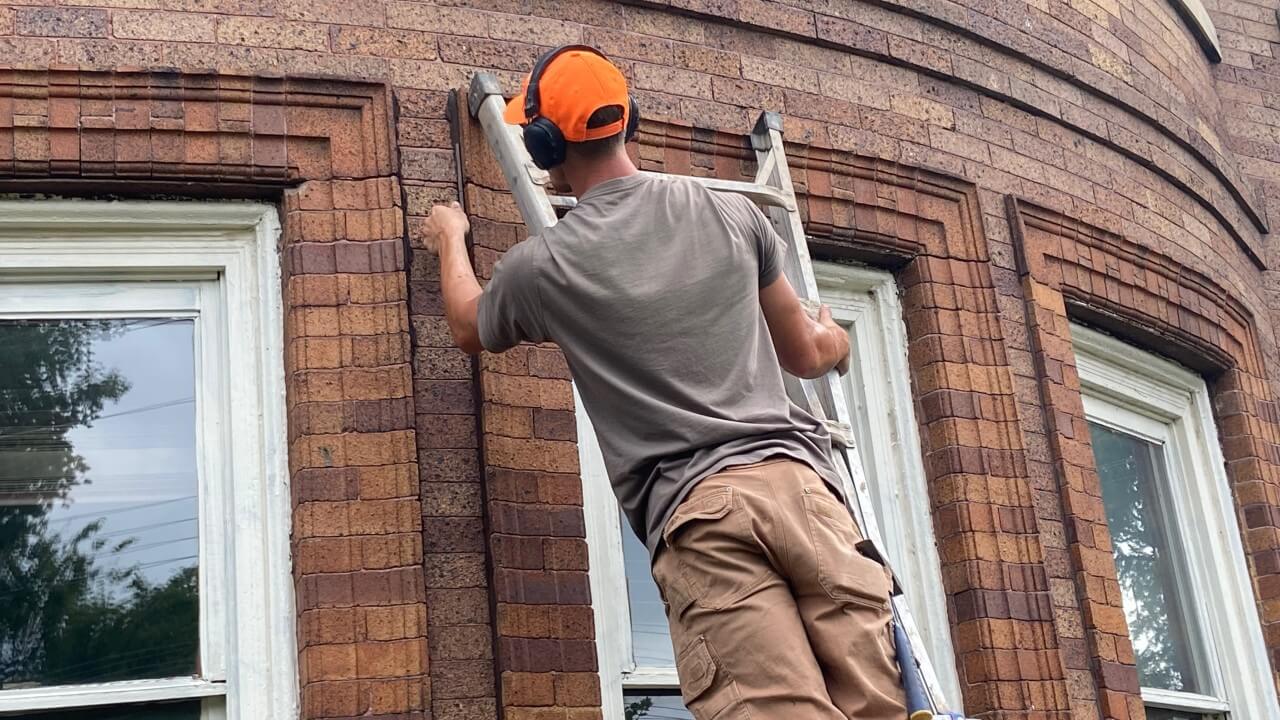
Introduction: The Foundation of Civilization
From the Great Pyramids to the cathedrals of Europe and the red brick streets of American towns, masonry has always been the backbone of civilization. It is not simply building—it is legacy, science, and artistry woven into one craft. While modern construction embraces technology, masonry remains grounded in the tactile truth of materials and the irreplaceable experience of skilled hands.
This article is a tribute to the craft—and a definitive guide for those who wish to master it.
Section I: The True Mason Knows the Materials
1. Mortar Isn’t Just Mortar
There are five types of mortar—Type N, S, M, O, and K—each designed for specific structural and environmental needs.
• Type N is your general-purpose mix for above-grade walls.
• Type S handles structural load and below-grade exposure.
• Type M is brute strength—used for foundation work and retaining walls.
• Type O and K are reserved for historic or interior restoration due to their low compressive strength and high flexibility.
Mistake of the novice: Using high-strength mortar on old brick can cause irreversible damage due to incompatibility with softer materials. The masonry doesn’t fail—the mortar does the damage.
2. Know Your Brick and Stone
Not all brick is the same. There’s face brick, common brick, engineered modular units, salvaged clay, and reclaimed lime-fired units. Each has its own compressive rating, thermal expansion profile, and absorption rate.
Likewise, stone must be understood by type:
• Granite is durable but hard to shape.
• Limestone is porous and breathable—ideal for restoration.
• Sandstone weathers beautifully but is soft.
• Fieldstone requires dry-fit understanding and an eye for natural pattern.
Section II: The Science of the Set
1. Base Preparation: The Hidden Truth Beneath Every Wall
A structure is only as good as its base. Whether laying a walkway, block wall, or foundation, the sub-base must be:
• Compacted to 95% Proctor Density
• Free of organic material or soft pockets
• Sloped for drainage (min. 1% away from structure)
• Sealed off from root systems or expansive soils
Use ASTM D448 gravel (#57 or #8) and washed concrete sand for paver bases.
2. The 3-Point Golden Rule of Laying Units
• Level – Each course must be laser-leveled.
• Plumb – Vertical alignment must be checked every 3–5 courses.
• Bond – Maintain a consistent pattern and stagger, whether running bond, stack bond, Flemish, or herringbone.
A true mason sees not just the next brick—but the finish line, course by course.
Section III: Historic Restoration—Where Craft Meets Legacy
The heart of historic masonry is respect for the original system. This includes:
• Using lime-based mortar (NHL 3.5 or 5) on 19th-century structures
• Hand-chiseling joints to match historic tooling (grapevine, beaded, concave)
• Replacing damaged units with in-kind material—not just what’s available
• Avoiding power grinders unless surgically required
The goal of restoration is not newness—it is to extend life without erasing time.
Section IV: Weatherproofing and Longevity
Flashing, Weeps, and Sealants
• All masonry above-grade structures should include through-wall flashing at moisture collection points.
• Weep holes every 24–36” at base courses allow vapor migration.
• Siloxane or silane-based sealants protect porous masonry without sealing it like plastic.
Never use acrylics or water-based sprays on historic brick—they suffocate the wall.
Section V: The Soul of the Work
Masonry is slow. It doesn’t shout—it whispers legacy. You don’t rush a fireplace, or a chimney crown, or a hand-tooled wall. These structures outlive us. A mason is not just a builder—they are a steward of permanence.
Every joint tells a story. Every line reveals pride. Every repair speaks of respect for what was—and what will be.
Final Words: Excellence is the Standard
You can spot good masonry from across a street—and bad masonry from a mile away. The difference lies not in tools, but in mindset. A great mason is part technician, part artist, part philosopher.
In this field, there are shortcuts—but no second chances. Build it once. Build it right.
Because brick by brick, we shape the world.