
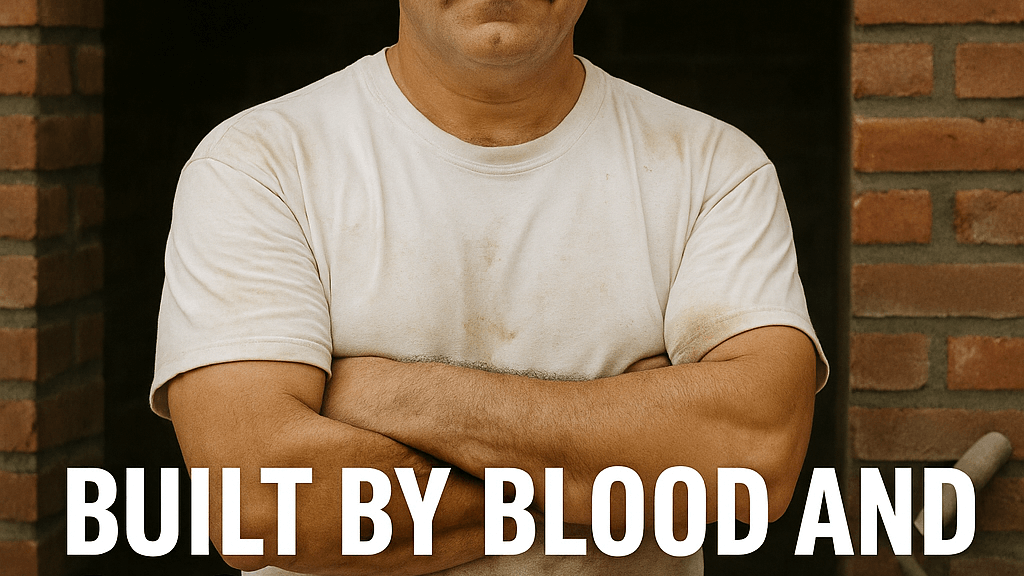
To be an Italian-American in the masonry industry is to carry a legacy that is older than America itself—a tradition of craft, pride, and purpose handed down across generations. It’s a way of life born from the stone quarries of Sicily, the marble veins of Carrara, and the terraced hills of Calabria. And when our families came to America, they brought that old-world craftsmanship with them, laying the foundation—literally—for many of Ohio’s greatest cities.
From Calabria to Cleveland: A Trade Takes Root
In Cleveland, Italian immigrants helped build the city’s skyline and infrastructure from the ground up. Little Italy wasn’t just a neighborhood—it was a masonry training ground. The Sacred Heart of Jesus Church, the brick storefronts along Mayfield Road, and countless civic buildings were laid by Italian hands. The Cleveland Museum of Art and its grand stone exterior stands today because men with names ending in “-o” and “-i” knew how to cut, set, and seal every inch of it.
Youngstown: Steel, Brick, and Brotherhood
In Youngstown, where steel ruled the economy, Italians worked the furnaces by day—and built their homes by hand at night. Masonry gave immigrant families something steel mills couldn’t: ownership, independence, and the ability to leave something behind. Retaining walls, brick porches, limestone churches—each project told a story of a family trying to rise. The trades were passed from father to son, and from job to job. You’ll still see their legacy in the mills, civic halls, and residential streets of Mahoning County.
Toledo: River Cities and Brick Foundations
In Toledo, along the Maumee River, Italian stonemasons helped shape the city’s riverfront and downtown expansion in the early 1900s. From curb work to cathedrals, masonry was the backbone of growth. Even today, historic preservation efforts in the Old West End lean on the craftsmanship of the past—brick arches, sandstone porches, and hand-carved details left by Italian masons who never asked for credit, only respect for the craft.
Cincinnati: The Queen City and the Italian Handprint
Cincinnati, with its German and Italian immigrant roots, showcases some of the most detailed masonry in the state. The hillside retaining walls, the Romanesque Revival churches, and the intricate facades of Over-the-Rhine owe much to Italian-American builders. In neighborhoods like Little Italy in Lytle Park, it’s clear that stone was not just used for strength—it was used for beauty. Italians helped shape the Queen City’s charm with tools that never left their side.
Columbus: A Legacy Still Being Built
Here in Columbus, where I live and work, that legacy is alive and well. From Italian Village to the stately brick homes in Clintonville and Victorian Village, Italian-American masons left an undeniable mark. Today, our company, Curatola Masonry, continues to restore, preserve, and build on that heritage. Whether we’re grinding out a historic chimney, restoring a 19th-century stone wall, or laying the foundation for a modern commercial structure, we do so with the same precision, passion, and pride as our ancestors.
The Common Thread Across Cities
What unites all these cities—Cleveland, Youngstown, Columbus, Toledo, Cincinnati—isn’t just the brick and stone. It’s the story behind it. Italian-Americans didn’t just lay mortar; they built communities. They brought the architectural influence of Rome, Florence, and Palermo to the Midwest. They formed unions, trained apprentices, and took immense pride in knowing that their work would outlive them.
Why It Still Matters
Today, masonry isn’t just about durability—it’s about preserving identity. In an age of prefab materials and disposable buildings, we Italian-American masons are keepers of permanence. The detail matters. The craftsmanship matters. Because behind every stone is a story. And in Ohio, that story is deeply Italian.
We build to last. We build with soul. And across Ohio, from courthouse steps to cathedral spires, our ancestors live on in every joint, every cap, and every cornerstone.
“The walls we build today were shaped by the hands of those who came before us. And through our work, they still speak.”