
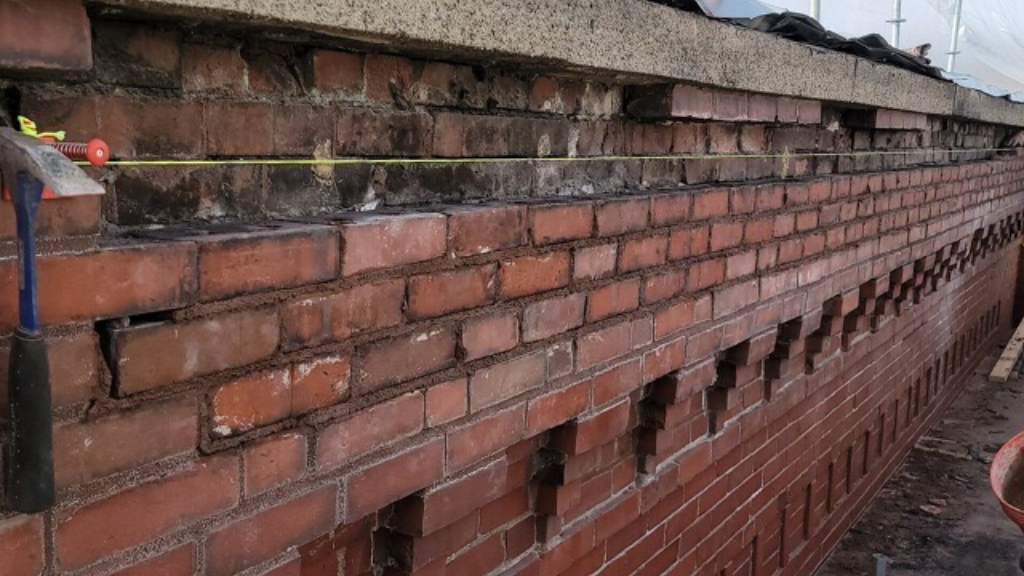
Historic masonry is more than brick and mortar—it’s legacy. When you work on old buildings, you’re not just making repairs, you’re honoring craftsmanship, community, and time itself. I’ve spent decades restoring historic structures across Ohio, and if there’s one thing I’ve learned, it’s this: you don’t treat old buildings like new ones.
Whether you’re a homeowner, architect, or part of a preservation board, here are some of the essential do’s and don’ts when working with historic brick and stone.
⸻
DO: Respect the Original Materials
Old buildings were built with a different mindset—and different materials. Most used softer, lime-based mortars that allowed for natural movement and breathability. Using modern Portland cement on historic structures can trap moisture, crack bricks, and do more harm than good.
At Curatola Masonry, we always match the original mortar composition, texture, and color. That way, the building maintains its integrity, inside and out.
⸻
DON’T: Use Harsh Chemicals or Power Washing
I’ve seen too many facades ruined by aggressive cleaning methods. Power washing or acid-based cleaners can erode soft brick, strip historic patina, and even cause irreversible staining.
Gentle, tested cleaning methods and restoration-specific products are the way to go. If in doubt, test a small, hidden area—or better yet, let a preservation pro handle it.
⸻
DO: Document Before You Work
When we take on a restoration, we start with photos, material samples, and a site review. Why? Because every old building tells a story, and you don’t want to erase it by accident.
Historic photos, maps, and original plans (when available) can guide everything from joint spacing to brick bond patterns. And it’s the small details—like matching tool marks and trowel finishes—that make or break a good restoration.
⸻
DON’T: Guess When You Can Research
Working on a historic property without checking local preservation guidelines, zoning, or the Certificate of Appropriateness (COA) process can get you into serious trouble. Some cities—like Worthington, Canal Winchester, and German Village—are strict about what you can and can’t touch.
We make it a point to work hand-in-hand with preservation councils and SHPO (State Historic Preservation Office) teams to make sure our work enhances history, not violates it.
⸻
DO: Tuckpoint with Skill and Care
Tuckpointing on a historic structure isn’t just a repair—it’s an art form. The depth, profile, and color of the mortar joints all matter. We grind by hand, use period-appropriate tools, and match everything down to the pigment.
Poor tuckpointing doesn’t just look bad—it can trap moisture, push bricks apart, and cause major deterioration over time.
⸻
DON’T: Replace What You Can Repair
Salvaging original materials is always better than replacing them. When bricks or stones are spalling, cracked, or shifted, we stabilize and reset before considering full replacement. It keeps the historic character intact and preserves the building’s original fabric.
And when replacement is truly necessary? We source reclaimed materials that match in age, size, and texture.
⸻
Preservation Isn’t Just a Service—It’s a Responsibility
At Curatola Masonry, we take pride in being stewards of Ohio’s architectural history. Every job we take on—whether it’s a 150-year-old home or a church built in the 1800s—is treated with the same care and precision as if it were our own family’s legacy on the line.
If you’re working on a historic structure and want it done right, with respect for the past and protection for the future—let’s talk.
– Justin Curatola
Founder, Curatola Masonry
Veteran Owned. Preservation Driven. Craftsmanship Built to Last.