
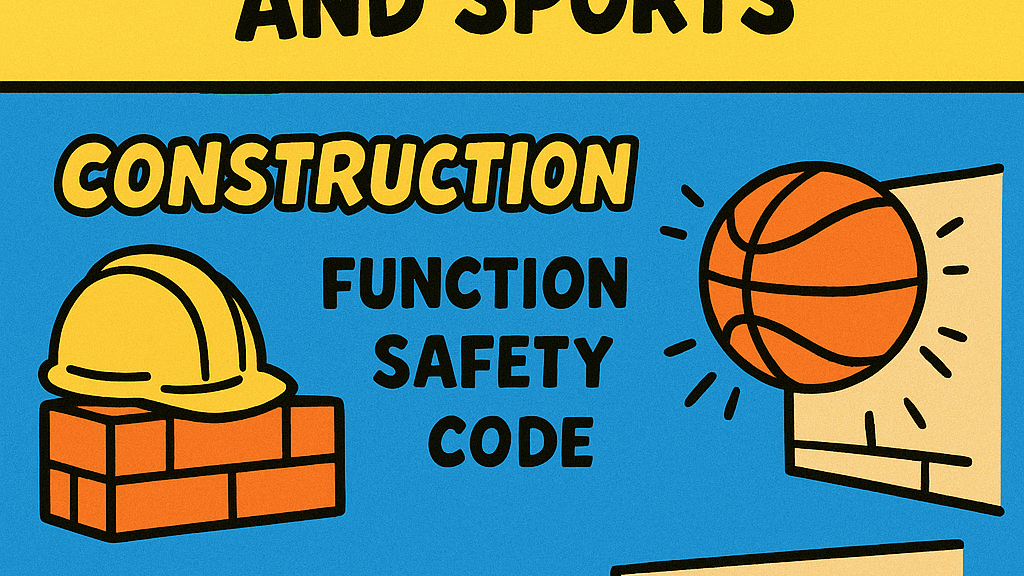
Whether it’s a structural CMU wall, a retaining system, or a sports rebound wall, height isn’t just a design choice—it’s an engineering requirement. Wall height directly affects structural integrity, performance, cost, and most importantly, safety.
This article breaks down the importance of wall height across two critical sectors: construction and athletics, and why every inch must be justified by code, function, or physics.
🏗 Construction Walls: Height Equals Load, Not Looks
In construction, walls serve structural, load-bearing, or retaining functions. Their height is governed by material limits, building codes, and environmental loads.
Key Considerations:
• IBC & ACI 530 Guidelines: Unreinforced masonry typically caps at ~10–12 ft unless reinforced.
• Taller walls demand bond beams, rebar, pilasters, grouted cells, and sometimes engineered anchor systems.
• Retaining walls over 4 feet (including depth) typically require engineering and drainage.
If you’re adding height to a wall post-construction? That triggers permit requirements, code review, and usually engineering sign-off.
🧱 Retaining Walls: Soil Pressure Changes Everything
Retaining walls don’t just “stand”—they resist earth. The higher the wall, the greater the lateral pressure pushing back.
General Rule: Retaining walls over 4 feet tall must be engineered.
Without the correct drainage, geogrid reinforcement, and compacted backfill, taller walls will crack, bulge, or fail—regardless of surface appearance.
🏅 Sports Walls: Rebound, Containment & Safety
Athletic facilities have their own wall standards driven by functionality and player safety.
Examples:
• Lacrosse rebound walls: 10–12 ft (practice); 16–20 ft (elite training).
• Tennis & pickleball backstops: 8–12 ft netting or rebound surfaces.
• Indoor gym walls: Must be padded within 3 ft of court per NCAA/NFHS guidelines.
Height determines trajectory return, ball control, and player injury risk. These aren’t just walls—they’re part of the training system.
🧠 Common Myths About Wall Heights
1. “Let’s add a couple more blocks.”
→ Not unless the foundation and wall are designed for that load. It’s a code violation without sign-off.
2. “Dry-stacked stone is fine up to 5 ft.”
→ Maybe aesthetically—but structurally, anything over 30–36 inches needs lateral design.
3. “Sports walls don’t need engineering.”
→ In many commercial setups, they do—especially if athletes are interacting with them.
📜 Legal & Compliance Factors
• Permit Thresholds: Walls over 4 ft typically trigger permit/inspection.
• Zoning: Wall height can be limited by property line setbacks.
• Insurance: Improper wall construction can void coverage or create liability risk.
• ADA: Any wall adjacent to accessible paths over 30” tall may require guardrails.
Conclusion
Wall height is a structural decision—not an afterthought. Whether supporting a second story, holding back earth, or rebounding a lacrosse ball, the design must follow code, context, and intent.
At Curatola Masonry & Preservation, we’ve built everything from 100-year-old limestone foundations to NCAA-grade sports rebound walls. We don’t guess—we engineer.
🔧 Built on Craft. Grounded in Code. Trusted by Generations.
📞 614-313-6642
📍 Columbus, OH