
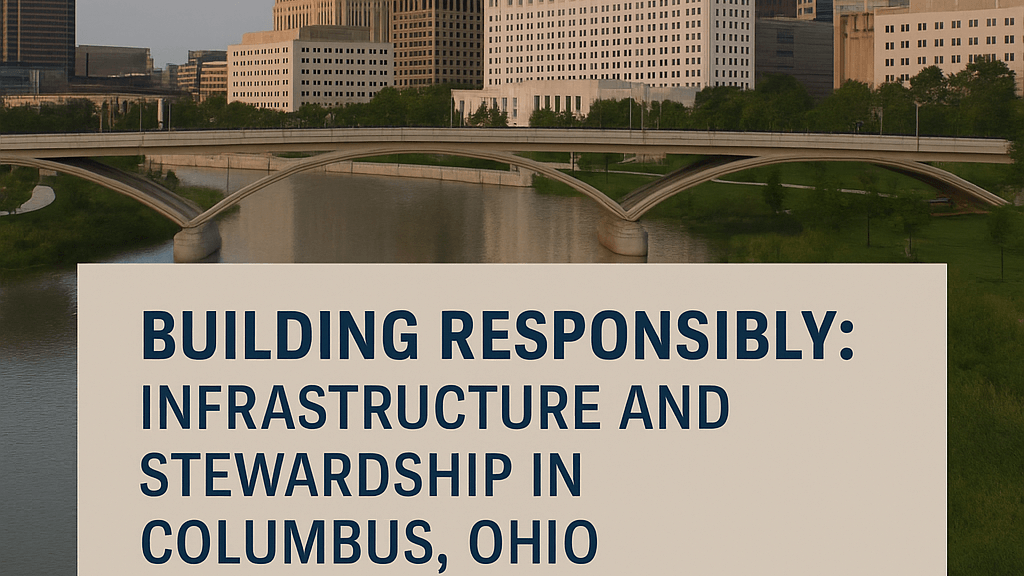
As Columbus expands, the conversation around infrastructure can no longer be limited to concrete, steel, and square footage. If we are to truly serve the people of Ohio—and preserve the land, water, and ecosystems entrusted to us—we must lead with integrity, sustainability, and long-range planning.
For those of us who work with our hands and design with foresight, infrastructure is more than roads and bridges. It’s stormwater systems that respect our watersheds. It’s shoreline protection that honors ecological balance. It’s construction that works with nature—not against it.
As partners in development, ODNR plays a vital role in how we shape the built environment. The question now isn’t whether we grow—Columbus is growing. The question is whether we grow responsibly.
What We Must Do – With ODNR at the Table
1. Advance Green Infrastructure Standards
Low-impact development (LID) must be more than a checkbox. As flooding increases and watersheds grow more fragile, we need bioswales, permeable concrete, and native plantings integrated into every urban and suburban project.
Action: ODNR can help mandate or incentivize natural stormwater management on both public and private sites. Retention isn’t just a code issue—it’s a conservation one.
2. Protect and Restore Urban Natural Resources
In-fill and redevelopment should not mean the elimination of tree canopies, riparian buffers, or wetland edges. Green spaces are not luxuries—they are health infrastructure, habitat corridors, and climate stabilizers.
Action: Promote conservation easements, tree credits, and native plant overlays in developing zones. Embed ODNR reviews earlier in planning cycles.
3. Hold Builders to Environmental Stewardship Standards
Contractors, including myself, must do more than meet the minimum. The trades and construction industries must be brought into the conversation—not after designs are finalized, but from the beginning.
Action: ODNR can partner with licensed GCs and masons to create best practices guides for working near protected lands, shorelines, and sensitive ecological zones.
4. Champion Adaptive Reuse and Historic Preservation
Sustainable construction means conserving what’s already here. Columbus is rich in historical architecture, natural stone, and foundational systems that, with skilled trades, can be restored rather than replaced.
Action: ODNR should continue its leadership in historic grants, limestone preservation efforts, and compatible material standards that work within both ecological and historical contexts.
What We Must Not Do
Ignore the Long-Term Ecological Cost
Every pipe, slab, and backfill that ignores hydrology or ecology becomes tomorrow’s remediation project. Short-term convenience is long-term liability.
Default to Mass Grading and Over-Compaction
We’re turning natural absorption systems into concrete bowls. Water is going where it’s not supposed to—because we’ve erased where it used to go.
Permit Without Oversight
ODNR must remain empowered not only to advise—but to enforce standards, especially around creeks, wetlands, lakeshores, and conservation districts. Collaboration is key—but accountability matters.
Conclusion: Conservation is Construction
In this moment, Columbus and Ohio as a whole have the opportunity to show what it means to grow with care. Growth is inevitable. But stewardship is a choice.
The trades are ready. We’re building with better tools, smarter materials, and a deeper respect for the land we work on.
What we ask from ODNR is continued partnership, vision, and leadership. Because when the state leads with stewardship, the builders follow with excellence.
Let’s get this right—for today, and for generations who’ll inherit what we build.