
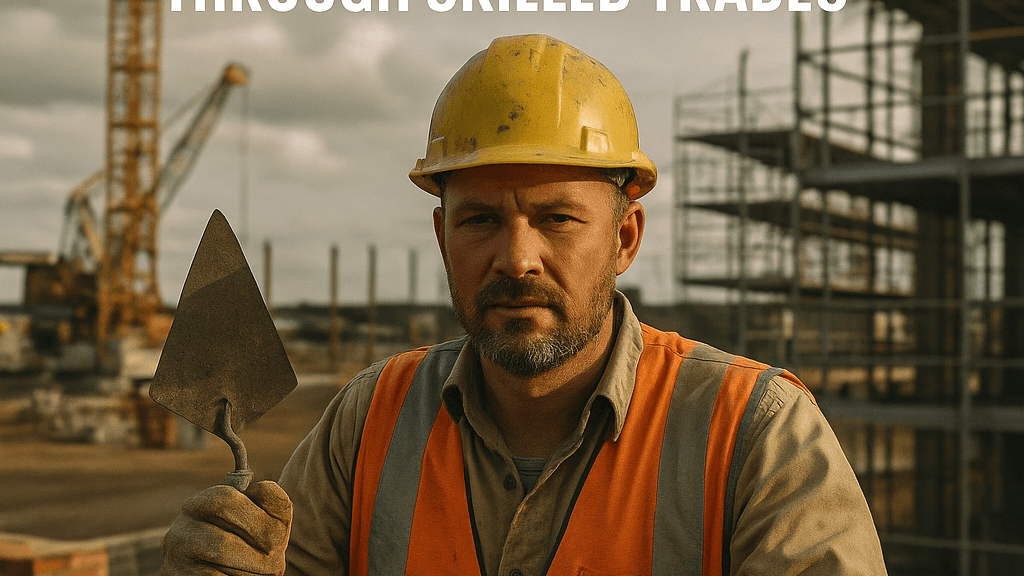
In the shadow of glass towers and digital dreams, America is quietly facing a crisis—not one of tech, but of touch. A crisis not measured in bandwidth, but in bricks. We are losing the hands that built this country. And if we’re not careful, we’ll lose the legacy too.
As a fourth-generation mason and the founder of Curatola Masonry, I’ve had the honor of restoring historic structures, building modern foundations, and mentoring the next wave of craftsmen. But one truth grows louder with every passing year: the skilled trades are being forgotten. And without them, America doesn’t stand.
A Vanishing Workforce
Masonry, carpentry, electrical, concrete, ironwork—all pillars of our infrastructure—are facing a workforce shortage. The average age of a master mason in this country is now over 50. Young people, told that success only comes through college and office work, are choosing other paths. Meanwhile, job sites sit idle, projects delay, and the quality of work suffers at the hands of inexperience or shortcuts.
But here’s the truth: the trades are noble. They’re profitable. And they’re essential.
The Cultural Rebuild
It’s time to change the conversation. We need to restore respect for the trades—because without skilled hands, nothing stands. We need to go into schools, community centers, and homes and remind families that the trades offer not just jobs, but careers. Not just paychecks, but pride. I’ve seen it in every young person who laid their first brick, trowel in hand, unsure at first—until they step back and see they’ve built something real.
Legacy in Limestone
Walk through any town in Ohio—Columbus, Cleveland, Youngstown, Toledo, Cincinnati—and you’ll see stone walls, chimney stacks, arched brickwork, and limestone sills placed with care by generations past. These weren’t just buildings. They were blueprints of belief: in family, in craft, in community.
Masonry is not a lost art—it’s just waiting to be passed on. We don’t need to reinvent the trade. We just need to tell its story again. It’s a story of immigrant pride, of American perseverance, of structures meant to outlast the men who built them.
Innovation Meets Tradition
While masonry is rooted in tradition, the future is here. We now use AI to estimate projects, laser tools to measure structural lines, and 3D models to plan restorations. And yet—none of it matters without the trained hand. Technology can support, but it cannot replace a seasoned eye or a steady hand setting a keystone.
Our trades need to evolve—but not by erasing our methods. The future is not automation versus artisan. It’s innovation with tradition.
Mentorship is the Foundation
If we want to revive the trades, we have to invest in people. Apprenticeship programs, on-the-job mentoring, licensing paths, and hands-on training—these aren’t optional. They’re oxygen.
At Curatola Masonry, we’ve doubled down on training. We don’t just hire—we develop. Because the only way to rebuild the industry is to raise up those who will carry it next. That means working with schools, trade boards, veterans, and anyone willing to learn the right way, the first time.
Integrity is Everything
Let’s also be clear—there are those out there cutting corners. Doing unlicensed work. Ignoring structural code. That’s not tradition. That’s theft—from the client, from the craft, and from our future.
We need more leadership and accountability in our industry. Whether you’re on the jobsite, running a company, or serving on a licensing board—your voice matters. It’s time we raise the standard and defend the trades with honor.
A Call to Build Again
This article isn’t just a reflection. It’s a call to action. If you’re a tradesman—mentor someone. If you’re a parent—introduce your kid to the craft. If you’re a contractor—invest in your crew. If you’re a policymaker—fund vocational education like the future depends on it. Because it does.
America was built by hand. And with the right leadership, vision, and respect, it will be built again.
“You don’t need a degree to change the world. Sometimes, all you need is a trowel, some mortar, and the guts to get to work.”