
By Justin Curatola
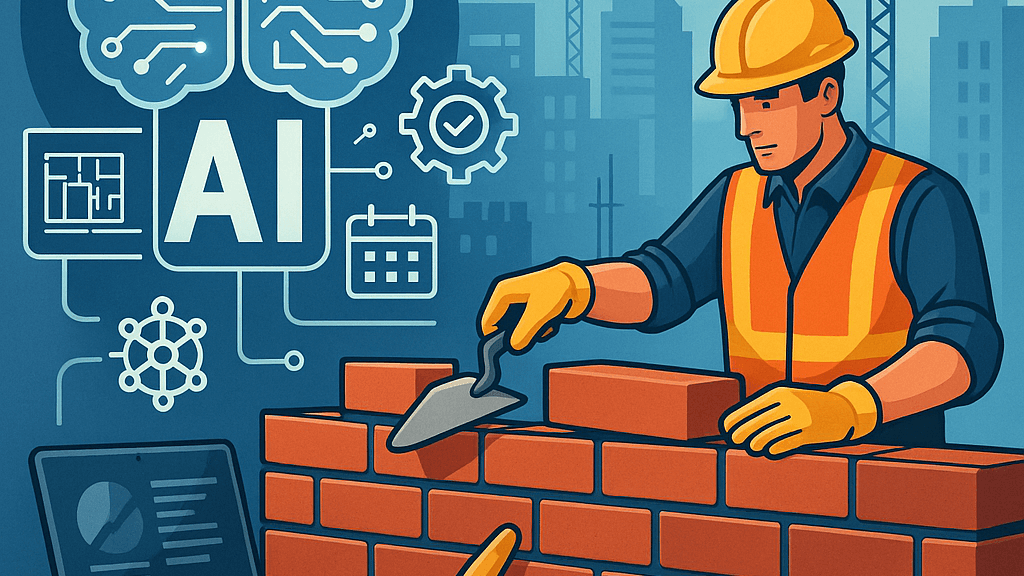
The trades are entering a new era. For centuries, masonry and construction have thrived on tradition, craftsmanship, and muscle. But today, a quiet revolution is happening on job sites, in estimates, and even at the office desk — powered by Artificial Intelligence.
As the founder of a masonry and facility engineering group built from the ground up, I’ve seen firsthand how AI can streamline operations, empower workers, and modernize how we build, repair, and preserve structures. It’s not just hype — it’s here, it’s useful, and it’s making tradespeople smarter and more efficient.
Here’s how AI is changing the game in construction and masonry:
1. Estimating & Proposal Automation
AI can process photos, blueprints, and materials data to produce instant rough estimates — saving hours of manual takeoffs and calculations. Tools like Verisk Xactimate, ChatGPT, and STACK help contractors auto-generate scopes, material lists, and even write-up professional proposals with disclaimers and code compliance built in. For companies that generate dozens of quotes a week, this is a game-changer.
AI Takeaway: Faster estimates = faster revenue cycles.
2. Project Planning & Scheduling
Machine learning can predict construction delays, forecast labor shortages, and recommend optimal crew schedules. Platforms like Procore and PlanGrid now integrate AI to identify potential job site clashes, improve sequencing, and reduce rework. In masonry, this means better staging, cleaner coordination with electricians/plumbers, and tighter delivery timelines.
AI Takeaway: Less downtime, more predictable margins.
3. Historical Preservation & Structural Analysis
For companies doing restoration work, AI image recognition tools can compare current building conditions to historical images and identify deterioration or missing elements. AI models trained on historic codes can even suggest proper mortar types or stone matches. When preserving 1800s brickwork, these insights are invaluable.
AI Takeaway: Preservation meets precision.
4. Safety Monitoring & Job Site Insights
Computer vision systems (like Smartvid.io) use AI-enabled cameras to monitor worker behavior, PPE compliance, and fall risks in real-time. For job sites with multiple trades and tight OSHA requirements, AI becomes your digital safety manager — documenting and preventing injuries before they happen.
AI Takeaway: Safer crews, fewer insurance headaches.
5. AI-Powered Client Communication
Construction clients today expect transparency, speed, and clarity. AI tools can automate status updates, create photo-driven progress reports, or answer client questions via chatbots and smart CRM platforms. These tools help small firms feel like they have a full-time admin and marketing team on call.
AI Takeaway: Happier clients without more overhead.
6. Labor Development & Training
Augmented reality (AR) and AI-driven simulations can help train new masons in bond patterns, lift technique, and restoration work — without wasting materials. Paired with AI instructional feedback, you can replicate decades of field experience in a few hours of training.
AI Takeaway: Bridge the skilled labor gap faster than ever.
Final Word: Don’t Replace, Empower
AI in masonry isn’t about replacing the trowel or the tradesman — it’s about enhancing them. The real value of AI is giving small business owners and skilled tradespeople a digital advantage, freeing them to focus on what humans do best: building, problem-solving, and creating with care.
For those of us who grew businesses from a pickup truck and a single client, AI isn’t a threat — it’s a toolkit.
And the best part? It’s just getting started.
About the Author
Justin Curatola is a fourth-generation mason, founder of Curatola Masonry and the Curatola Group, a veteran-owned construction firm based in Ohio. He specializes in masonry restoration, facility engineering, and integrating smart tech into the trades.